Middle East
Egypt's Morsi names new prime minister

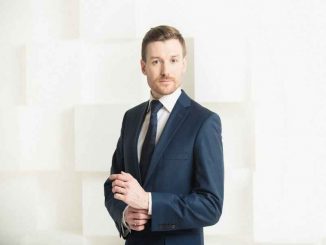
Mohamed Morsi, the Egyptian president, has named former irrigation minister Hesham Qandil as the country's new prime minister, state television has announced.
Qandil has been tasked with forming a cabinet, which he says he will do "in days", in coordination with the president.
The appointment on Tuesday comes 25 days after Morsi was sworn in as Egypt's first civilian and freely elected head of state. He replaced Hosni Mubarak, who was driven from office by a popular uprising in January last year.
Qandil was irrigation minister in the outgoing government of Kamal Ganzuri, whom he replaces as prime minister.
"This appointment of a patriotic and independent figure comes after much study and discussion to choose a person able to manage the current scenario," said Yassir Ali, a spokesman for President Morsi.
Speaking at a press conference following the announcement on Tuesday, Qandil said his priority was to fulfill Morsi's 100-day plan (which focuses on five main issues: security, traffic, bread, public cleanliness issues and fuel).
Qandil was part of the delegation headed by Morsi to the EU Summit in Ethiopia in mid-July. He was first appointed as minister of irrigation in July 2011.
He represented Egypt in several international conferences on water issues and also worked in the African Development Bank.
It is unclear what Qandil's powers will be or whether the country's military will continue to control the appointment of top security posts. He declined to categorically comment on the issue, saying only that the defence minister's portfolio would be decided based on talks with the president and the Supreme Council of the Armed Forces (SCAF).
Born in 1962, Qandil graduated from Cairo University's faculty of engineering before doing post-graduate studies in the United States. In 1993, he received a doctorate from the University of North Carolina.
Our correspondent said it was unusual for someone of Qandil's age to be appointed to a senior post, but that it was also one of the demands of Egypt's mass protest movement.
Power struggle
Since the presidential election in June, Egypt has been embroiled in a complex power struggle between Morsi, a former senior Muslim Brotherhood official, and the SCAF, which ruled the country since Mubarak stepped down in February 2011.
Just days before Morsi was elected, the SCAF disbanded parliament in response to a constitutional court ruling that it had been invalidly elected.
The origins of the battle for parliament lay in the constitutional declaration issued by the SCAF before the president was sworn in.
The declaration, which acts as a temporary constitution, granted the military sweeping powers, including legislative control, and rendered the presidential post little more than symbolic.
Our correspondent said that there had been no official announcement on the makeup of the rest of the cabinet.
| < Prev | Next > |
|---|
Other articles in Middle East
Clashes as Bahrain Grand Prix goes ahead 21 April 2013
US approves additional $123m aid to Syria 21 April 2013
Iraqis in first elections since US withdrawal 20 April 2013
Clashes intensify in Bahrain over Grand Prix 20 April 2013
Clashes break out in central Cairo 19 April 2013
Clashes as Bahrain gears up for Grand Prix 19 April 2013
Brahimi gives grim report on Syria stalemate 19 April 2013
Concrete action call ahead of Syria meeting 19 April 2013
Dozens killed in Baghdad cafe explosion 18 April 2013
UN aid chief calls for cross-border Syria aid 18 April 2013
Featured_Author
Opinion
|
America's Greatest Challenge |
| Timothy V. Gatto | |
|
Will Latin America Lead Us Out of the Drug War Morass? |
| Jacob Hornberger | |
|
Reinventing Guatemalan History |
| Stephen Lendman | |
|
Remembering Perot: Last Chance for Americans against Globalization |
| Ben Tanosborn | |
|
Benghazi smoke screen |
| Will Durst | |
|
65 Years of Palestinian Nakba |
| Elias Akleh | |
|
Women of the Wall |
| Uri Avnery | |
|
Alan Hart and What It Takes to Struggle On |
| Lawrence Davidson | |
|
The UN, Integrated Systems & American Intransigence To Accountability |
| Clive Hambidge | |
|
On Political Precondition |
| Richard Falk | |
|
LGBTQ exclusion of anti-capitalism |
| Soheil Asefi | |