The leading edge of a solar storm, which was expected since a massive eruption on the sun on Thursday, has reached Earth but caused no damage, scientists say.
The US Space Weather Prediction Center of the National Oceanic and Atmospheric Administration (NOAA) reported that a G1, or minor, geomagnetic storm was under way on Sunday.
The storm, which reached Earth at 1730 GMT on Saturday, could stretch to G2, or moderate, levels over the remainder of the weekend, NOAA said.
"Such a phenomenon lasts a couple of days and causes massive oscillations in the magnetic field," said Markus Langraf of the ESA satellite control centre in Darmstadt, Germany.
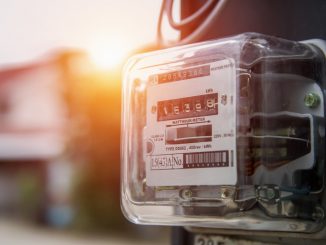
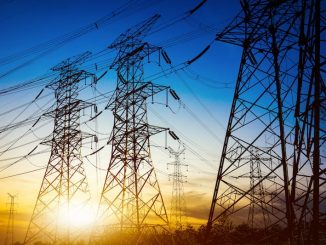
Solar storms can affect power grids, mobile phone communication as well as aviation.
The European Space Agency (ESA) told German news agency dpa that the storm had so far caused no damage to satellites.
Space weather forecasters said it would be a minor event and they didn't expect disruptions to power grids or communications systems.
Those living in the Northern hemisphere may be treated to a bravura performance by the Northern Lights, or Aurora Borealis, ESA officials said.
Northern lights
The colourful northern lights tend to form as the charged particles bombard Earth's outer magnetic field. Shimmering auroras may be visible at the US-Canada border and northern Europe, said Joe Kunches at the US Space Weather Prediction Center in Colorado.
The storm began on Thursday when the sun unleashed a massive flare that hurled a cloud of highly charged particles racing toward Earth at 3 million mph (4.8 million kph).
It was the sixth time this year that such a powerful solar outburst has occurred. None of the previous storms caused major problems.
In severe cases, solar storms can cause power blackouts, damage satellites and disrupt GPS signals and high-frequency radio communications. Airlines are sometimes forced to reroute flights to avoid the extra radiation around the north and south poles.
In 1989, a strong solar storm knocked out the power grid in Quebec, causing six million people to lose electricity.
The storm is part of the sun's normal 11-year cycle of solar activity, which is supposed to reach peak storminess next year.
According to space.com, international space agencies had been expecting the sun storm after a massive solar flare - known as a coronal mass ejection - erupted on the sun on Thursday, sending charged solar plasma toward the Earth.
NASA's Solar Dynamics Observatory captured Thursday's flare, wowing scientists with images of the massive outburst.
| < Prev | Next > |
|---|
Other articles in Americas
Avalanche kills snowboarders in Colorado 21 April 2013
Texas state officials lower blast death toll 20 April 2013
Maduro sworn in as Venezuela president 20 April 2013
Second Boston bombing suspect captured alive 20 April 2013
Search continues for Texas blast survivors 19 April 2013
Astronomers find most Earth-like planets yet 19 April 2013
Police swamp Boston as manhunt continues 19 April 2013
Teen 'fearful' after portrayal as US bomber 19 April 2013
Maduro to be sworn in as Venezuela president 19 April 2013
FBI releases photos of Boston blast suspects 18 April 2013
Related
Featured_Author
Opinion
|
Educational Apartheid & Social Inequity |
| Gideon Polya | |
|
America's Greatest Challenge |
| Timothy V. Gatto | |
|
Will Latin America Lead Us Out of the Drug War Morass? |
| Jacob Hornberger | |
|
Reinventing Guatemalan History |
| Stephen Lendman | |
|
Remembering Perot: Last Chance for Americans against Globalization |
| Ben Tanosborn | |
|
Benghazi smoke screen |
| Will Durst | |
|
65 Years of Palestinian Nakba |
| Elias Akleh | |
|
Women of the Wall |
| Uri Avnery | |
|
Alan Hart and What It Takes to Struggle On |
| Lawrence Davidson | |